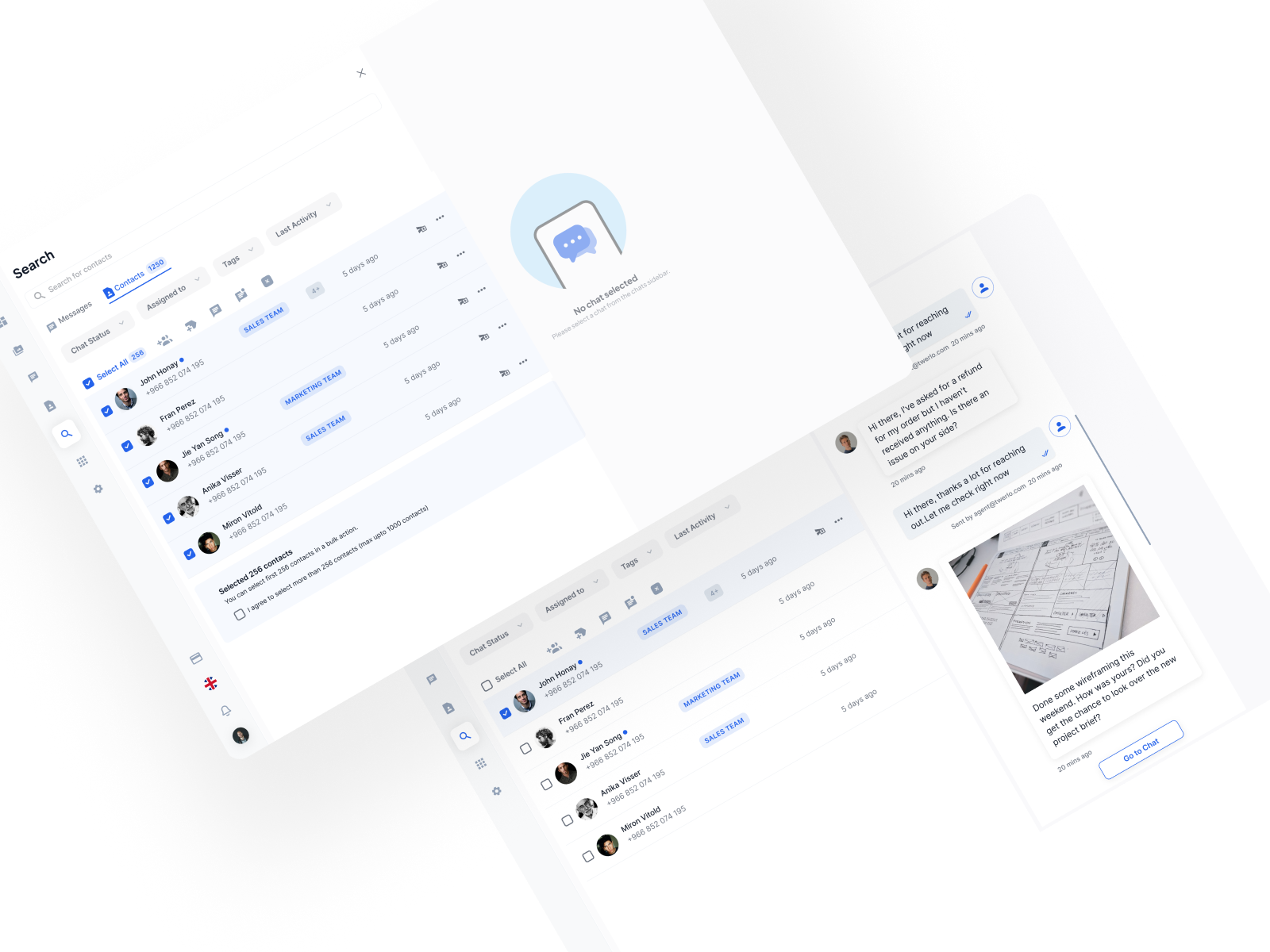
Mottasl 1.0 – Unified WhatsApp CPaaS Platform

Mottasl is an omnichannel B2B platform that unifies WhatsApp, Chatbots, and Team Collaboration into a single dashboard for automated customer support and growth.

 
Twerlo
CPaaS
Avocado

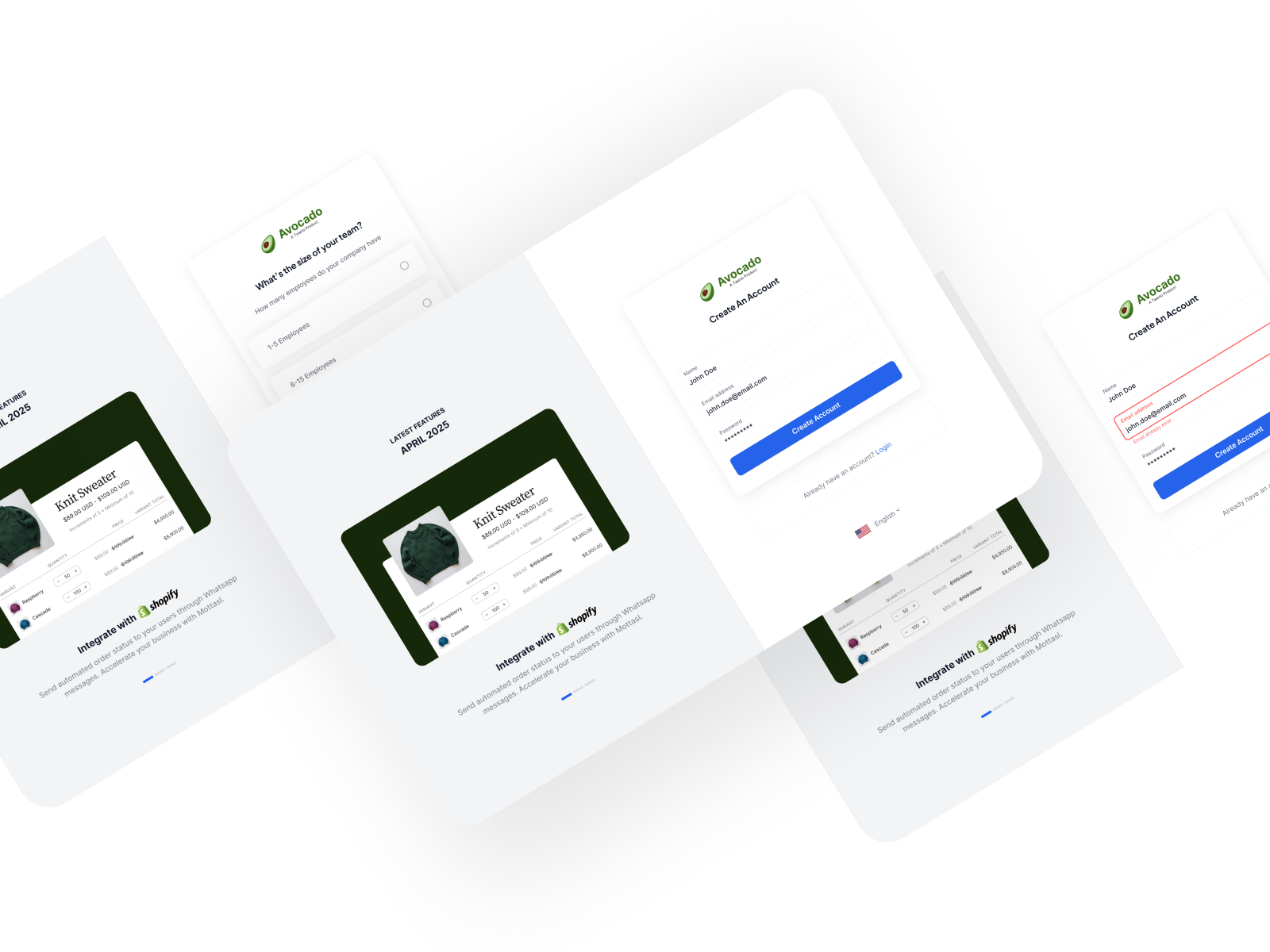
Note: The product was later visually updated using the Flowbite design system. Due to confidentiality, updated UI is not shown in this case study.

The work presented reflects the system and decisions at the time of design ownership. Updated versions can be shared on request.

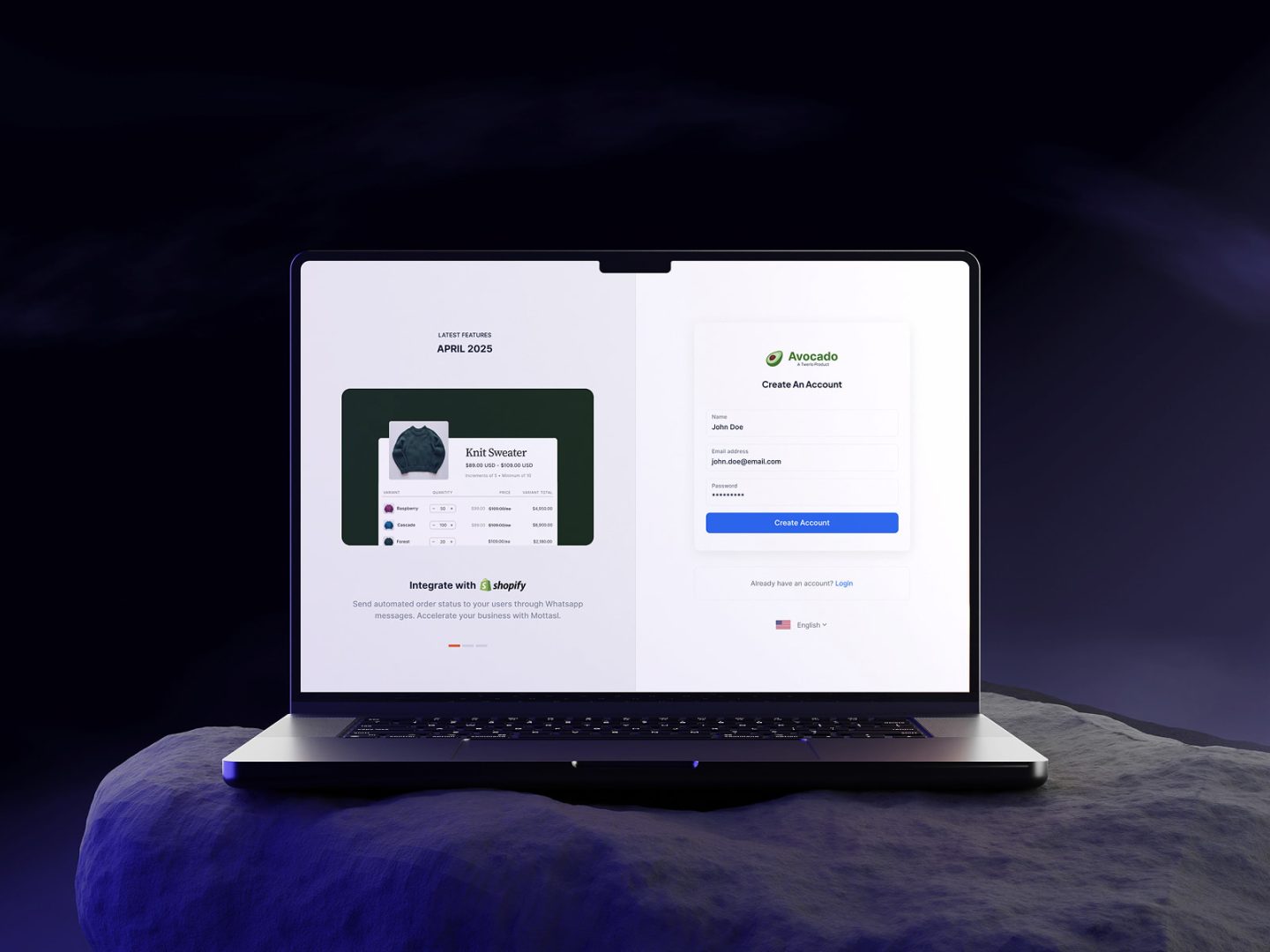
The “Avocado” Project

Problem

In MENA, WhatsApp is the dominant customer communication channel for sales and support. Yet businesses struggled because existing tools were fragmented, manual, and failed under real operational load.

Common issues:

– Conversations treated as ad-hoc chats, not structured business interactions.
– No scalable automation for campaigns, responses, or commerce flows.
– No unified system for teams, silos between sales, support, and marketing.
– Tools lacked language support for RTL users and regional business norms.

The core problem was not UI polish. It was a missing system that aligned WhatsApp messaging with real business outcomes.
Objective

Design a scalable, unified platform to help teams in MENA manage customer communication, automate workflows, run campaigns, and drive commerce directly within WhatsApp.

Design goals:

– Establish a single system where messages become outcomes such as orders, resolutions, and revenue.
– Create modular workflows that scale from small shops to enterprise.
– Build for bilingual RTL and LTR support as a core requirement.
– Ensure safety, compliance, and simplicity over unchecked configurability.

Users and Mental Models

Research and Signals

Input sources:

– Merchant and agent interviews
– Support logs and conversation transcripts
– Shadowing real WhatsApp handling
– WhatsApp Business API policy constraints
– Competitive analysis of messaging platforms


Key insights:

– WhatsApp is the primary customer touchpoint in the region.
– RTL support is mandatory for usability.
– Automation must protect against policy violations.
– Users need to understand how features impact outcomes.
– Scalability determines long term survival more than feature count.


Design Strategy

Three core principles:

  1. Conversations as State Machines
    Message flows are structured states with tracked outcomes.
  2. Progressive Automation
    Automation evolves from manual to assisted to fully automated with safety checks.
  3. Outcome-First Metrics
    Focus on orders, abandoned recovery, response time, and team performance.

Product Architecture and Modules

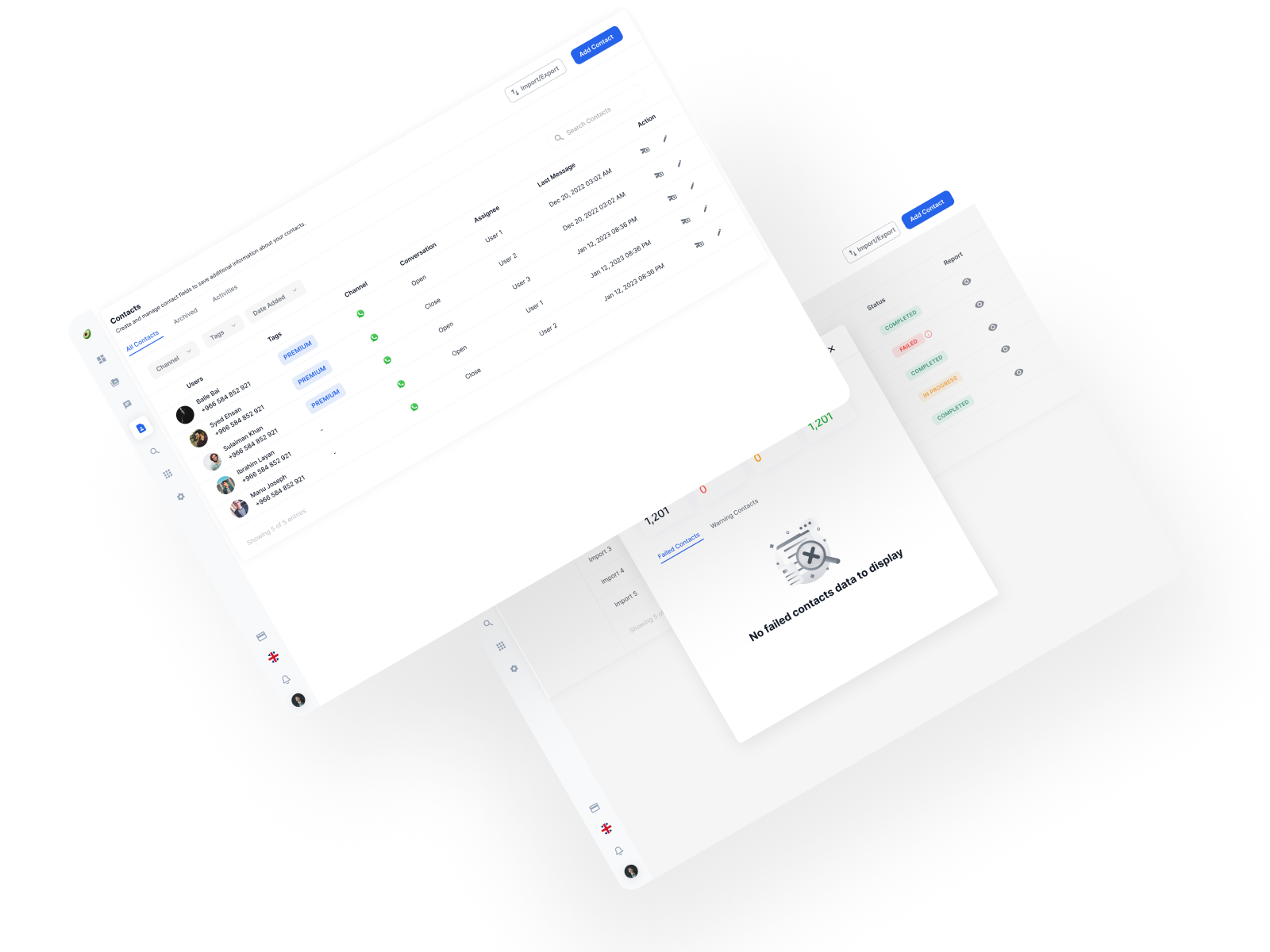
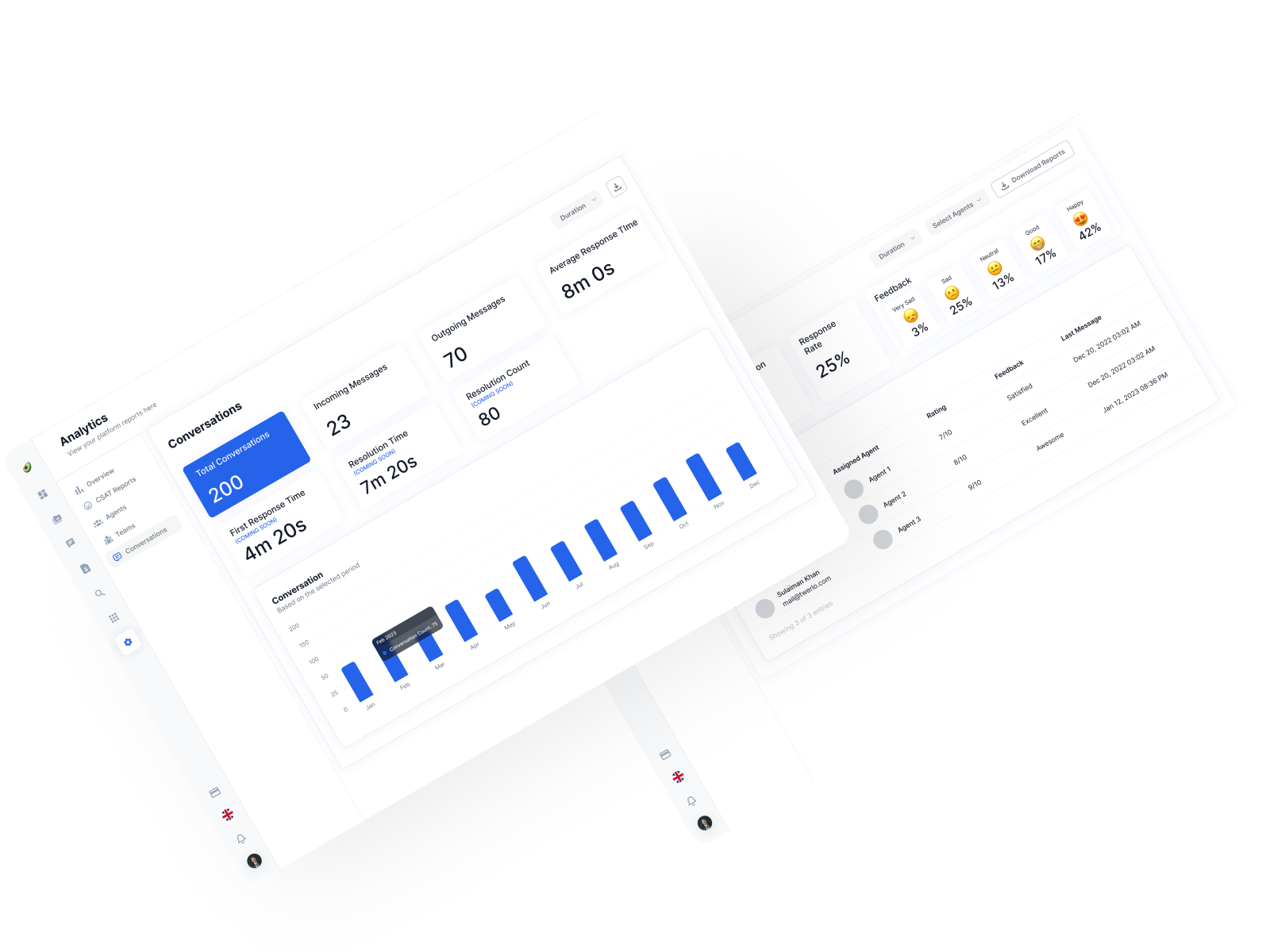
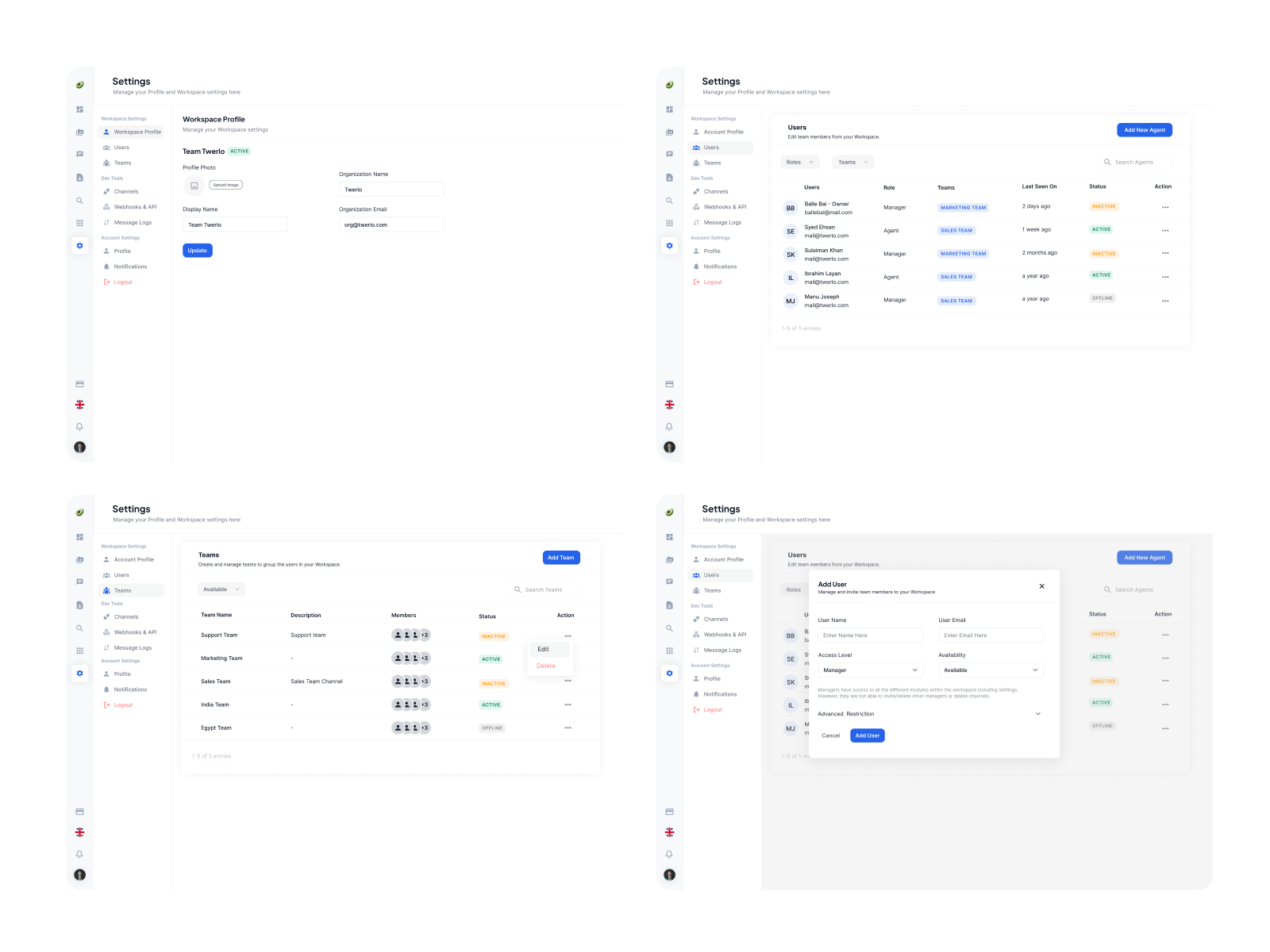
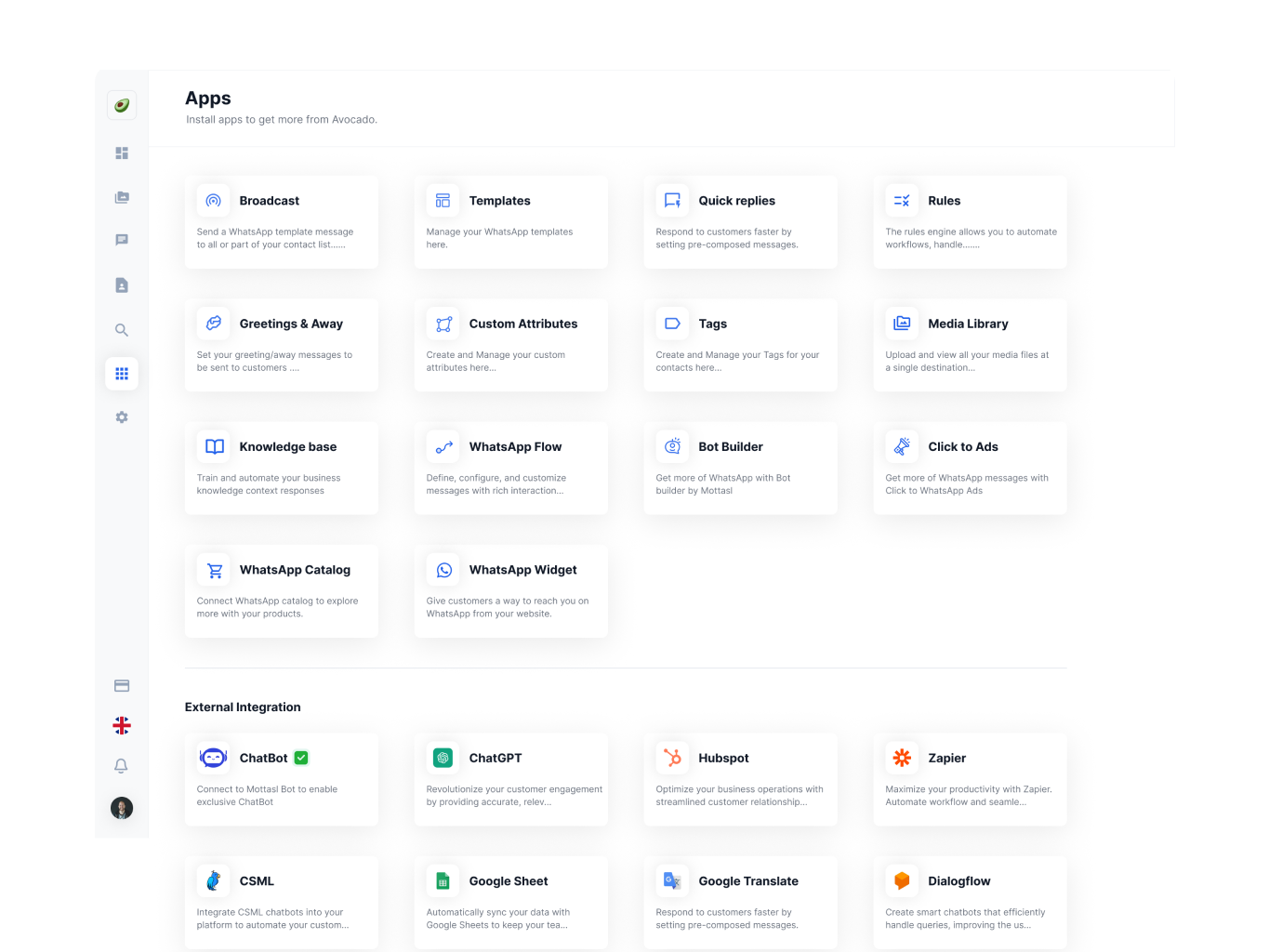
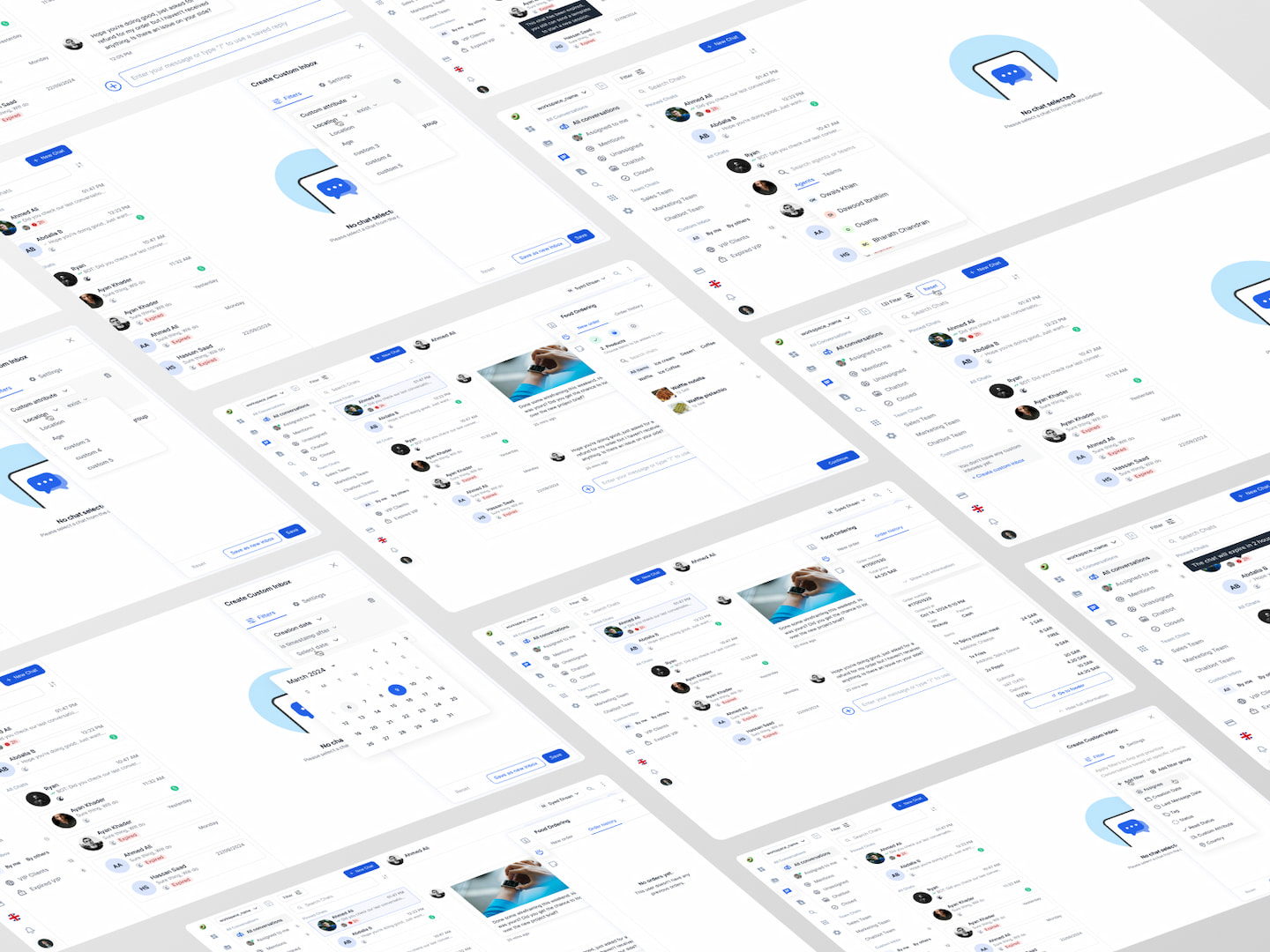
(Images used here are for reference purpose only)

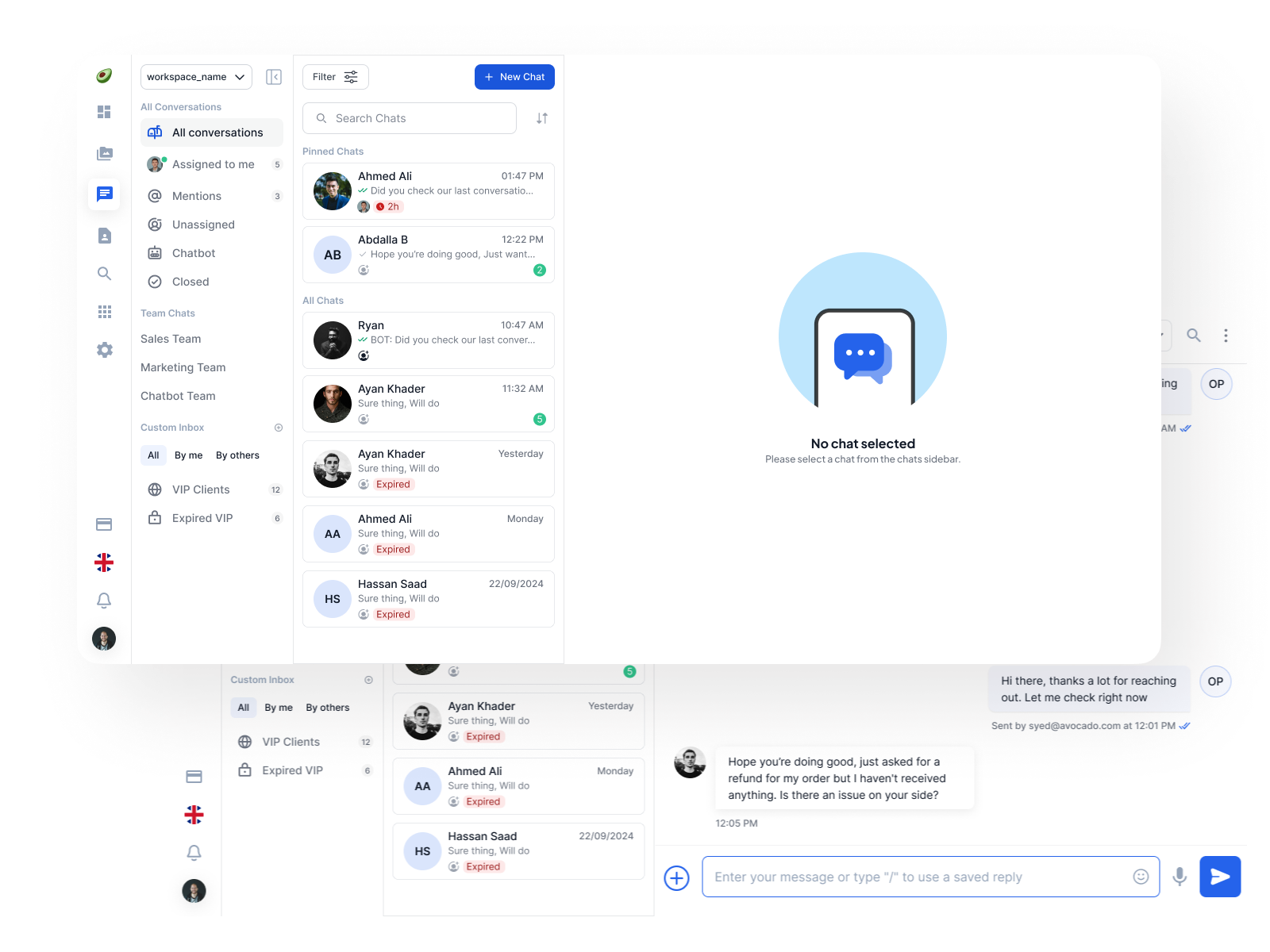
1. Inbox (Conversations)


Purpose: Operational execution hub

Capabilities designed:

  • Shared inbox with states (open, in-progress, resolved)
  • Thread ownership and assignment
  • Agent presence and context
  • Conversation tagging


Design challenges resolved:

  • Managing high-volume chats without overload
  • Maintaining context across languages (RTL/LTR)


Outcome:

  • Faster resolution
  • Clear team ownership
2. Automation / Chatbot

Purpose: Scale without headcount

Capabilities designed:
  • Rule-based automated replies
  • Intent triggers and fallback flows
  • Routing and escalation logic

Constraints handled:
  • WhatsApp API policies
  • Safe defaults to avoid spam or misuse
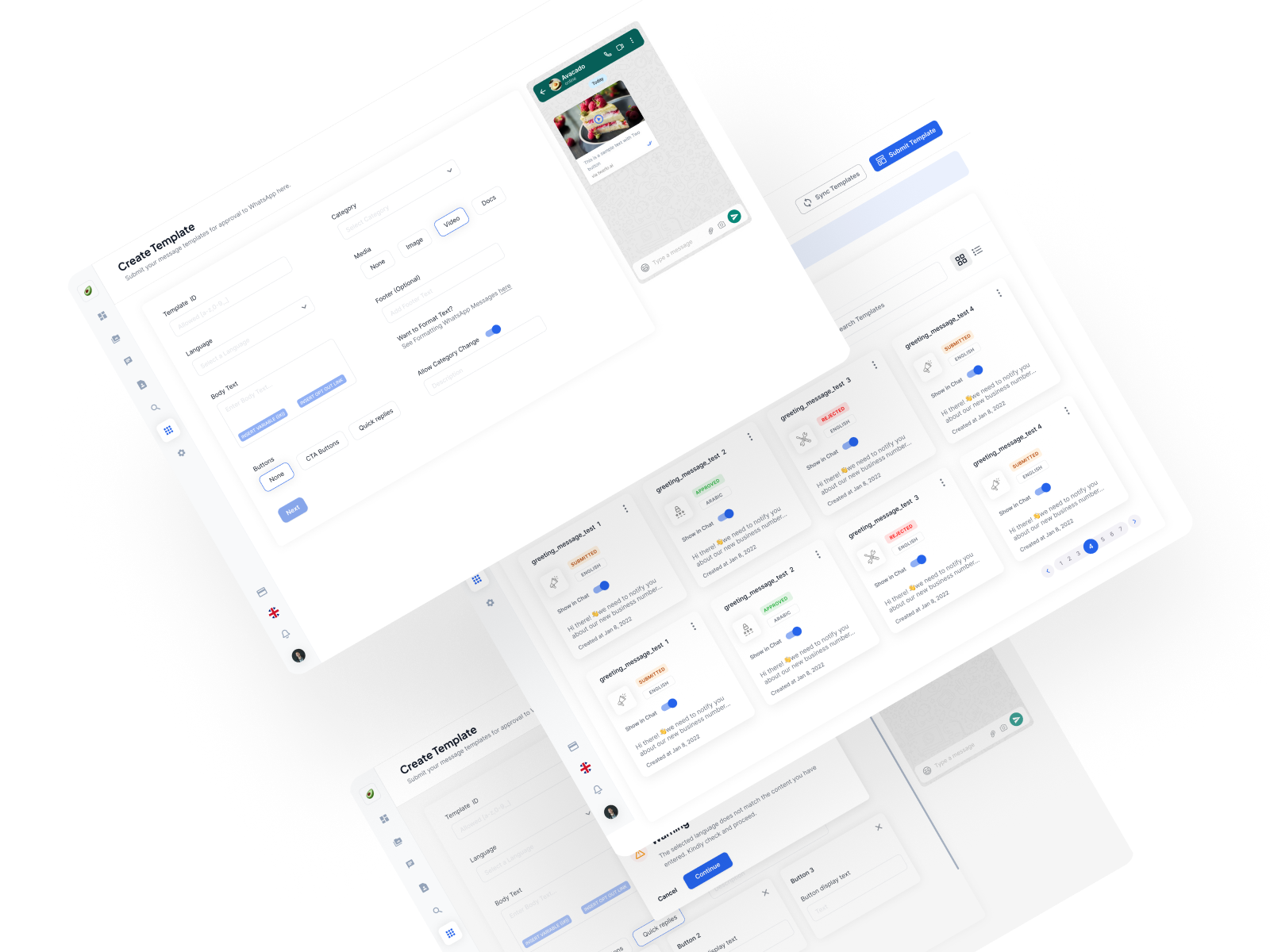
3. Templates (WhatsApp Message Templates)

Purpose: Compliance + consistency

Capabilities designed:
  • Template authoring interface
  • Approval status and policy indicators
  • Reuse and governance
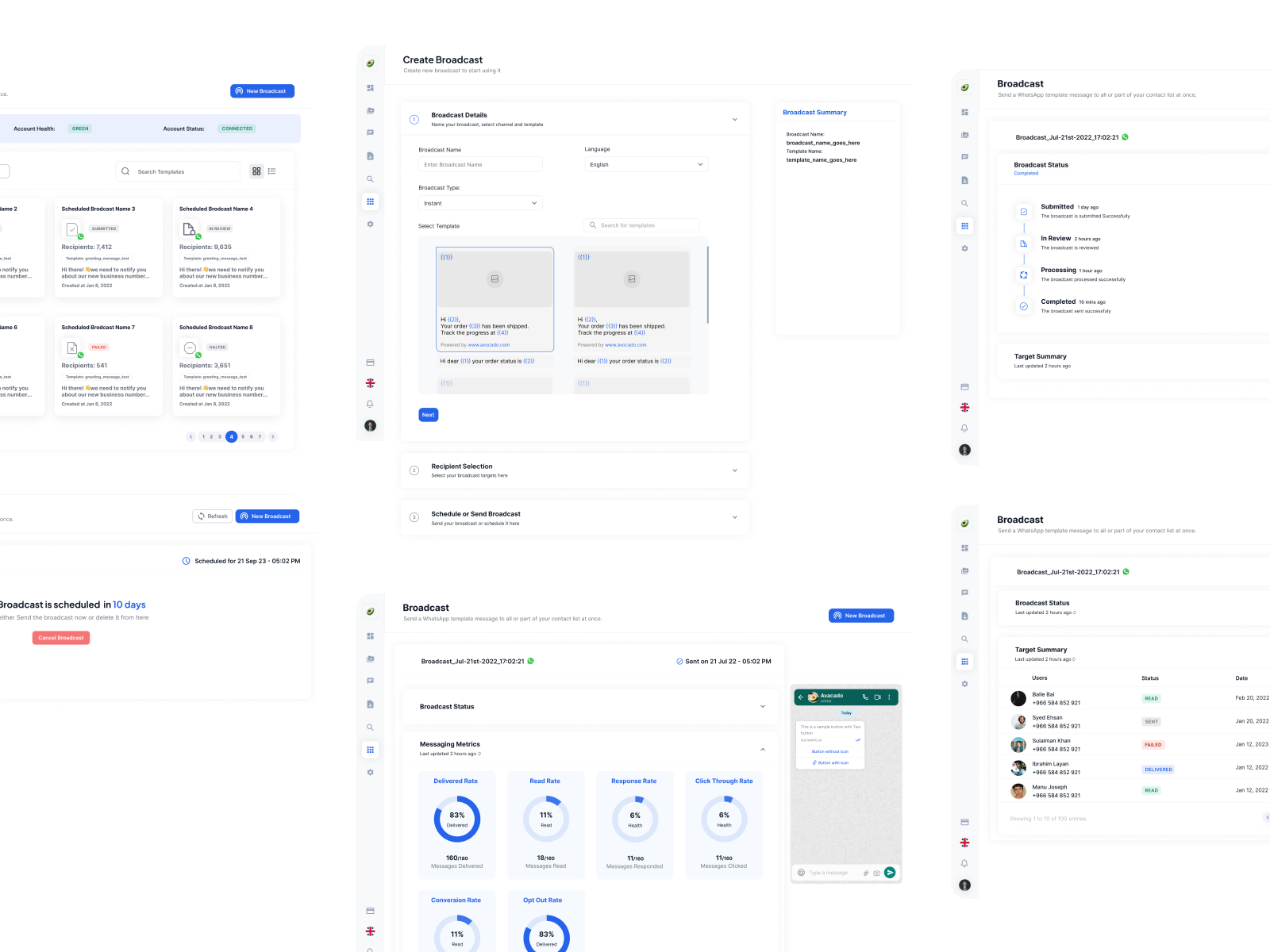
4. Broadcasts & Campaigns

Purpose: Outbound marketing / retention

Capabilities designed:
  • Segment builders
  • Personalized mass messages
  • Scheduling and throttling
5. Contacts / Customer Profiles

Purpose: Identity and memory

Capabilities designed:
  • Attributes and tags
  • Lifecycle state
  • History of conversations and orders

Outcome:
  • Better segmentation and personalization
6. Commerce & Notifications

Purpose: Convert conversations to revenue

Capabilities designed:
  • Order notifications
  • Cash-on-delivery confirmations
  • Abandoned cart recovery flows
7. Analytics & Reporting

Purpose: Decision support

Capabilities designed:
  • Team performance dashboards
  • Conversation trends
  • Revenue impact metrics
8. Team & Permissions

Purpose: Governance & safety

Capabilities designed:
  • Roles and permissions
  • Activity audit trails
  • Team routing logic
9. Apps Marketplace

Purpose: Extensibility

Capabilities designed:
  • Modular app integration (e-commerce systems, CRMs, payment tools)
  • Managed from within platform
10. Billing & Subscription Management

Purpose: Revenue & entitlement

Capabilities designed:
  • Plan tiers and quota management
  • Usage tracking
  • Invoicing and billing interface
11. Global Search

Purpose: Fast access to context

Capabilities designed:
  • Cross-module search
  • Contacts, conversations, templates, orders

Outcome:
  • Reduced friction in daily workflows

RTL & Localization

Designed UI and flows to support:

– Right-to-left language (Arabic)

– Bi-directional layouts

– Appropriate cultural and linguistic norms


This was a core requirement for platform adoption in MENA.

Design System & Patterns

Needed a system that:

– Handles bi-directional layouts

– Supports rapid iteration across languages

– Maintains component parity

– Includes accessibility and policy annotations

This system minimized rework and ensured consistency.

Constraints & Tradeoffs

– WhatsApp API imposes structural limits (template approval, message types).

– Automation misconfiguration has high operational risk → conservative defaults.

– Bilingual design increased complexity but was non-negotiable for UX.

Outcomes

Product outcomes seen after launch:
  • Merchants handled significantly higher chat volume
  • Automation reduced repetitive manual work
  • Campaigns improved engagement and retention
  • Commerce flows increased conversions
  • Teams worked more efficiently with shared inbox and analytics

Qualitative feedback:
  • Teams reported reduced context switching
  • RTL support improved usability for core users

Learnings

  • Systems solve more than screens.
  • Automation must be safe by default.
  • Strong defaults reduce support burden.
  • Localization is a strategic investment.
Close

End-to-end design from research to production-ready handoff.

Let’s have a Call

+91 9747 957 819

Email me at

hello@ahmedansaf.com

Connect VIA

LinkedIn

WANT IT TO SOUND PLAYFUL, LUXURIOUS, OR MORE/